Multidentate Anchoring Molecule Enables Scalable and Stable Blade-Coated SAMs for High-Efficiency Perovskite Photovoltaics
Researchers from the Qingdao Institute of Bioenergy and Bioprocess Technology (QIBEBT), Chinese Academy of Sciences and Qingdao University of Science have developed a multidentate anchoring molecule-assisted co-deposition strategy for fabricating self-assembled monolayers (SAMs) by blade coating. The study, entitled “Multidentate Anchoring Molecule-Assisted Blade-Coated Self-Assembled Monolayer for Scalable and Stable Perovskite Photovoltaics,” has been accepted for publication in Chem.
SAMs have emerged as promising hole-selective interlayers for high-efficiency inverted perovskite photovoltaics because of efficient charge extraction and minimal material consumption. However, commonly used phosphonic acid-based SAM molecules tend to aggregate in solution. During blade coating, such aggregation can lead to incomplete surface coverage, poor wettability, and spatially nonuniform interfaces, thereby limiting device reproducibility and large-area manufacturing.
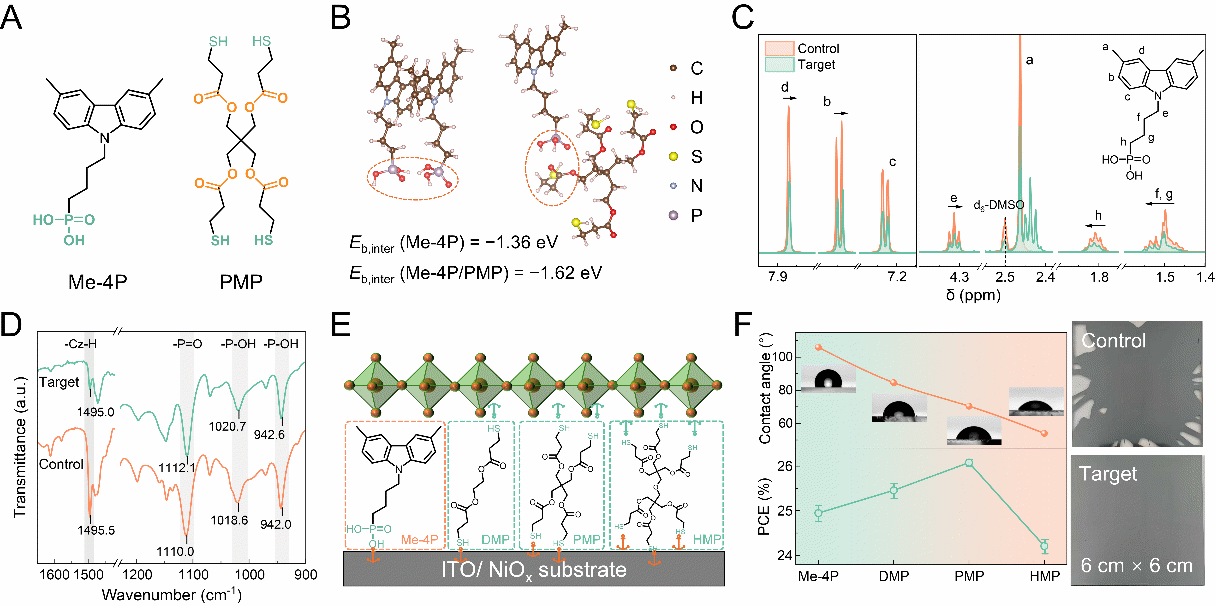
Figure 1. Intermolecular interactions and improved interfacial performance
To address this challenge, the researchers incorporated pentaerythritol tetra(3-mercaptopropionate) (PMP), a dendritic tetradentate thiol-anchoring molecule, into a Me-4P SAM matrix. DFT calculations and spectral measurement results showed that PMP interacts strongly with Me-4P through intermolecular hydrogen bonding. These interactions suppress Me-4P self-aggregation and improve its dispersion during solution processing, enabling the formation of a more continuous and uniform SAM layer by blade coating. Following film deposition, a fraction of the uncoordinated terminal thiol (-SH) groups are exposed on the film surface. These hydrophilic groups improve the wettability of the SAM interface toward the perovskite precursor, resulting in more uniform deposition and improved crystallization. The co-deposition strategy also reduced residual interfacial stress, strengthened adhesion at the buried interface, and passivated defect states, collectively improving the structural and electronic quality of the perovskite films.
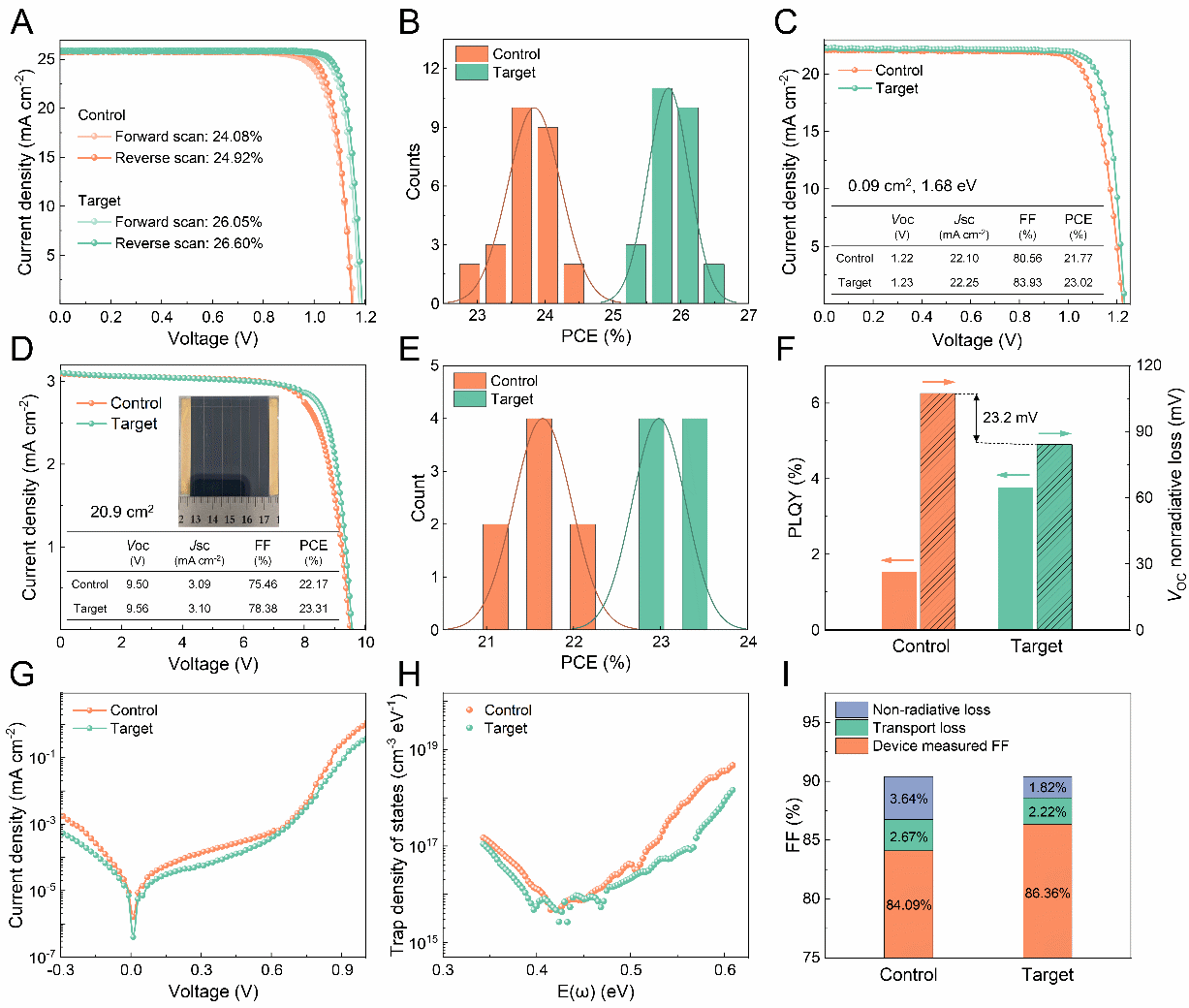
Figure 2. Device performance analysis
Benefiting from the synergistic improvement of anchoring quality and interfacial contact, small-area devices achieved a champion power conversion efficiency of 26.60%, with a certified efficiency of 26.23%. A 20.9 cm2 mini-module reached an efficiency of 23.31%, demonstrating the scalability of the approach. The strategy was also compatible with several commonly used SAM systems.The devices further exhibited strong long-term stability. They retained 96% of their initial efficiency after 1000 hours of continuous operation under the ISOS-L-1 protocol and maintained 91% after 1000 hours of thermal aging at 85 °C under the ISOS-D-2 protocol.
Overall, this approach provides a practical pathway for transferring high-performance SAM interfaces from laboratory-scale spin coating to scalable blade coating, bringing SAM-based inverted perovskite photovoltaics closer to large-area manufacturing.