Global young scientists gather in Qingdao for CAS iMAPS Summer School, powered by metaramanomics
The CAS iMAPS Summer School 2026 opened on July 12 at the Qingdao Institute of Bioenergy and Bioprocess Technology (QIBEBT), Chinese Academy of Sciences (CAS), bringing together 27 early-career researchers from 21 universities and research institutions across 11 countries and regions.
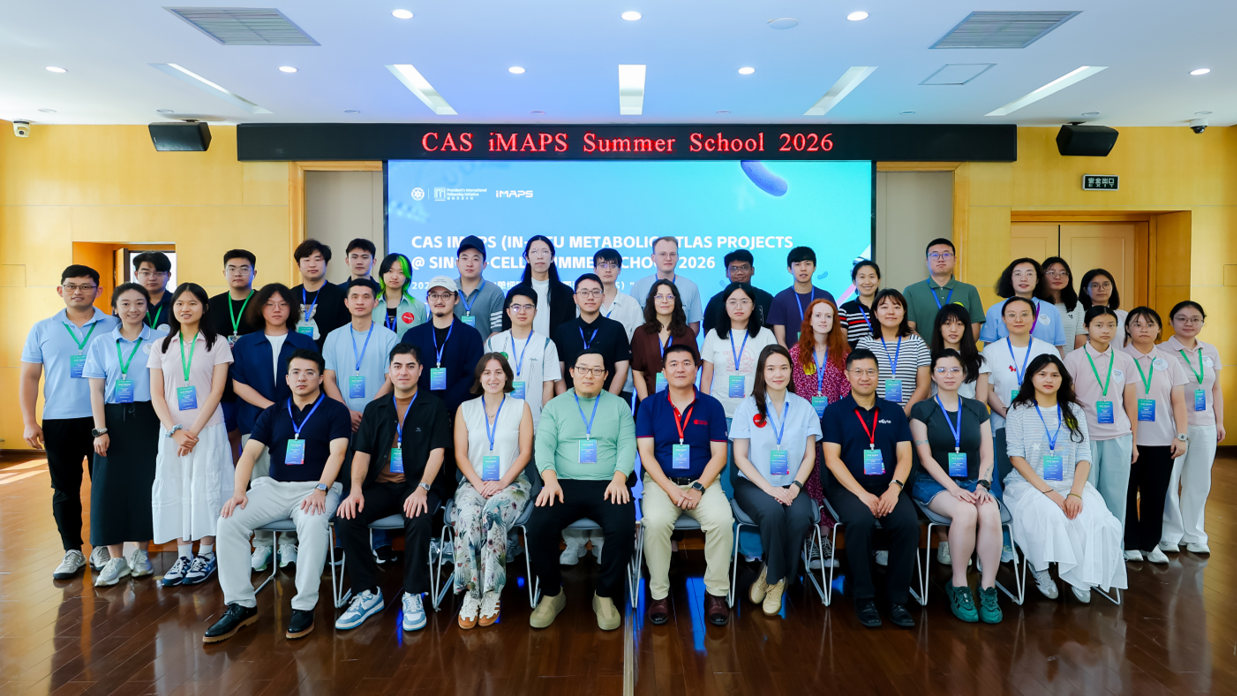
Funded by the CAS President’s International Fellowship Initiative (PIFI) and QIBEBT’s Division of Advanced Biomanufacturing, the ten-day program is co-organized by QIBEBT, the Green Carbon Resources Utilization Committee, CIESC, the Shanghai Institute of Materia Medica, CAS, the Xiong’an Innovation Institute, CAS, the Academy of National Food and Strategic Reserves Administration, and eCyte, Inc.
The summer school is held under the Green Carbon Program, an initiative led by QIBEBT that was endorsed by UNESCO as part of the International Decade of Sciences for Sustainable Development (2024–2033).
The program centers on iMAPS (in-situ Metabolic Atlas Projects @ Single-cell), an initiative under the World Microbiome Partnership (WMP), an international forum to coordinate microbiome science toward real-world impact. iMAPS is building a network of facilities that map microbiome functions at single-cell resolution and recover valuable living microbial resources.
Metaramanomics provides the technological foundation for iMAPS. It combines single-cell Raman metabolic profiling with targeted cell sorting and downstream cultivation or sequencing, linking phenotype to genotype. This enables researchers to address the microbiome “6W” questions: Who is doing What, Why, which viable resources (Wealth) can be recovered, and When & Where?
At the opening ceremony, Prof. XU Jian of QIBEBT welcomed the participants and outlined the scientific vision and training goals of the school. Prof. Rob Knight from University of California San Diego (UC San Diego), and Dr. Emma Rocke from University of Cape Town, delivered video remarks. The three co-chair the WMP's Working Group on Environmental Microbiomes and Climate Change (WG-F).
Knight highlighted the shift in microbiome research from identifying which microbes are present to understanding what they do. He said this transition led UC San Diego to establish the first metaramanomics platform in the United States and join iMAPS.
Rocke noted that fragmented efforts and limited standardization can slow the translation of microbiome research into climate action, a gap the WMP was formed to close. She described iMAPS as a bridge from observation to functional understanding, application and governance.
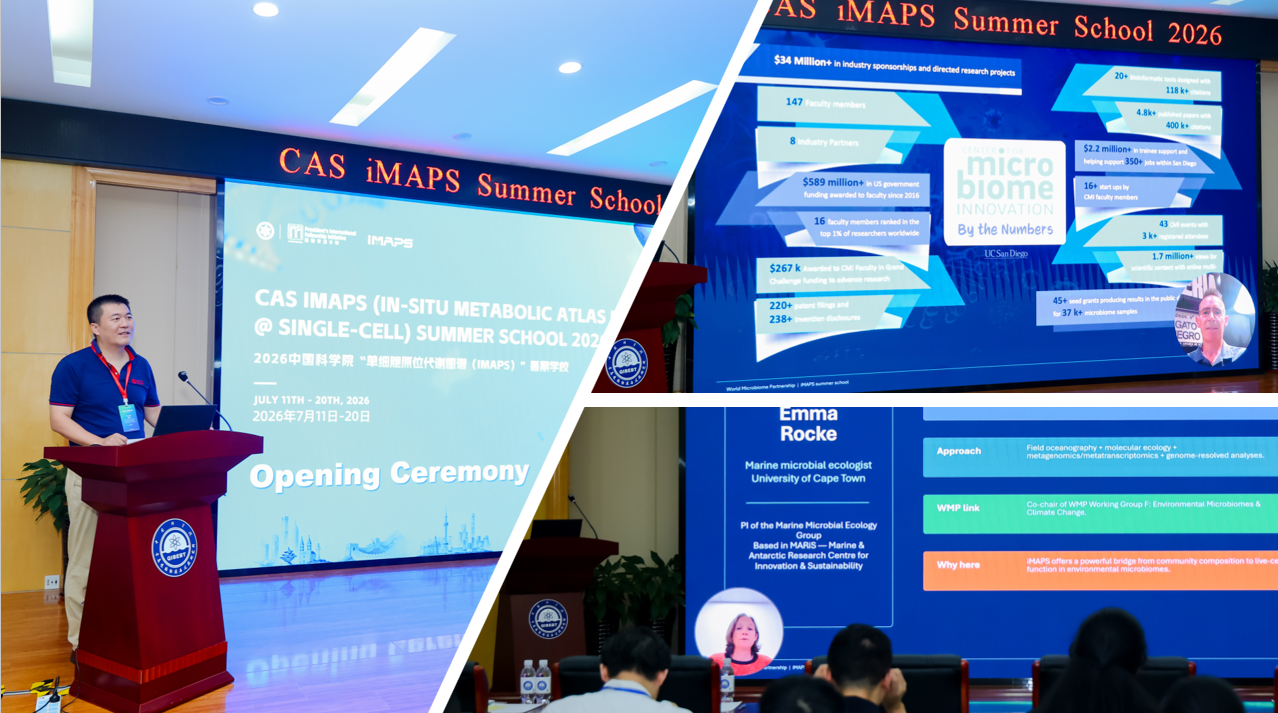
Following the ceremony, XU outlined plans for a global network of Microbiome Metabolic Observatories, or MiMOs, connecting standardized technologies, data and viable microbial resources across iMAPS nodes.
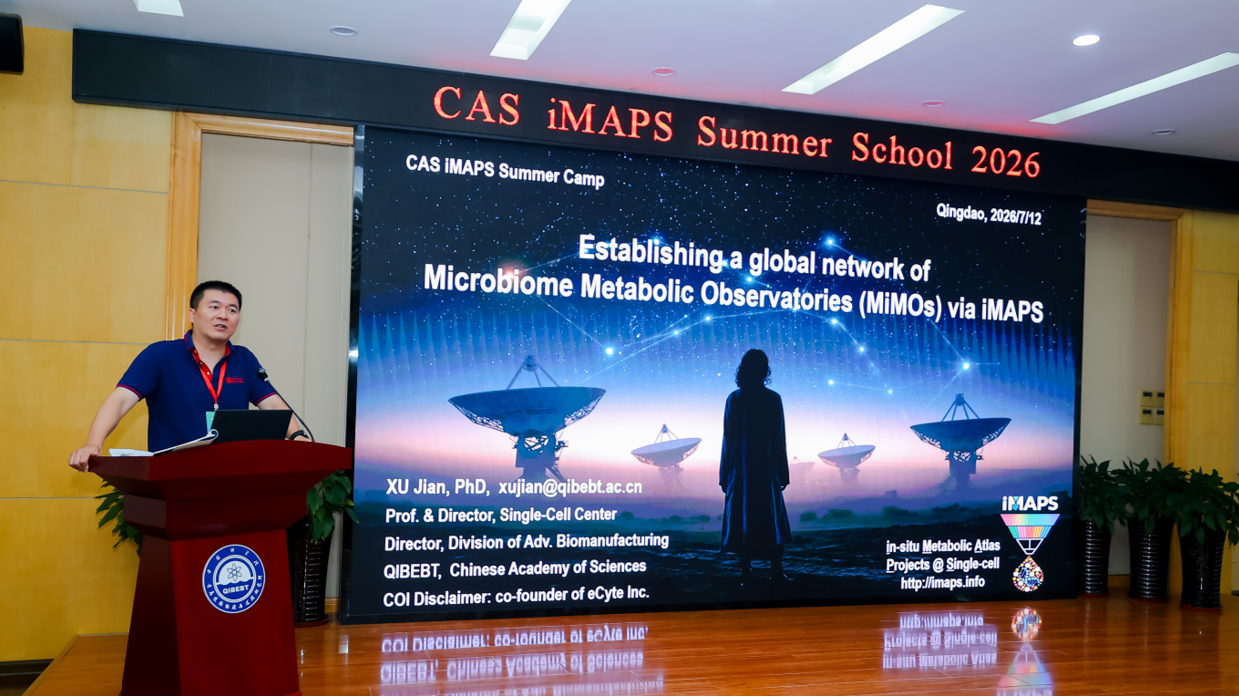
Day-one tutorials covered the iMAPS platform and Raman spectroscopy fundamentals, followed by sessions on FlowRACS and RAMS for cell sorting and the DCP for microdroplet-based cultivation and colony picking.
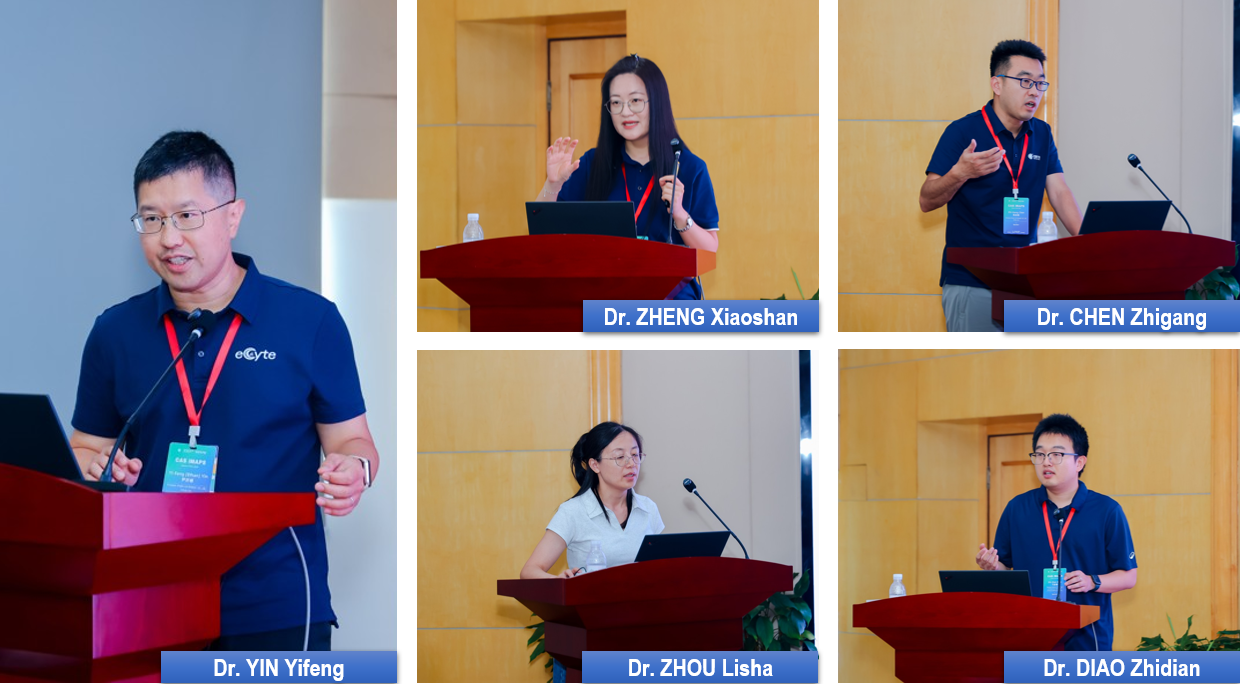
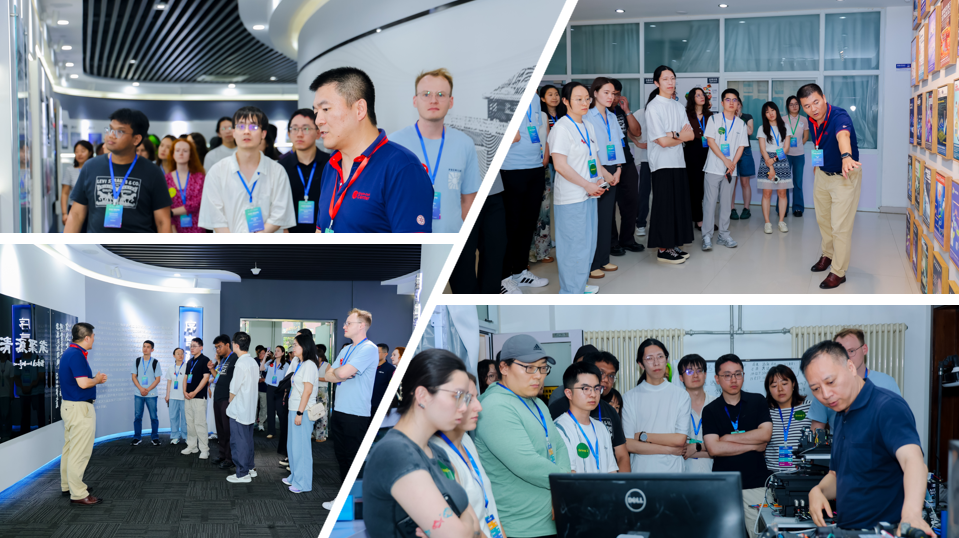
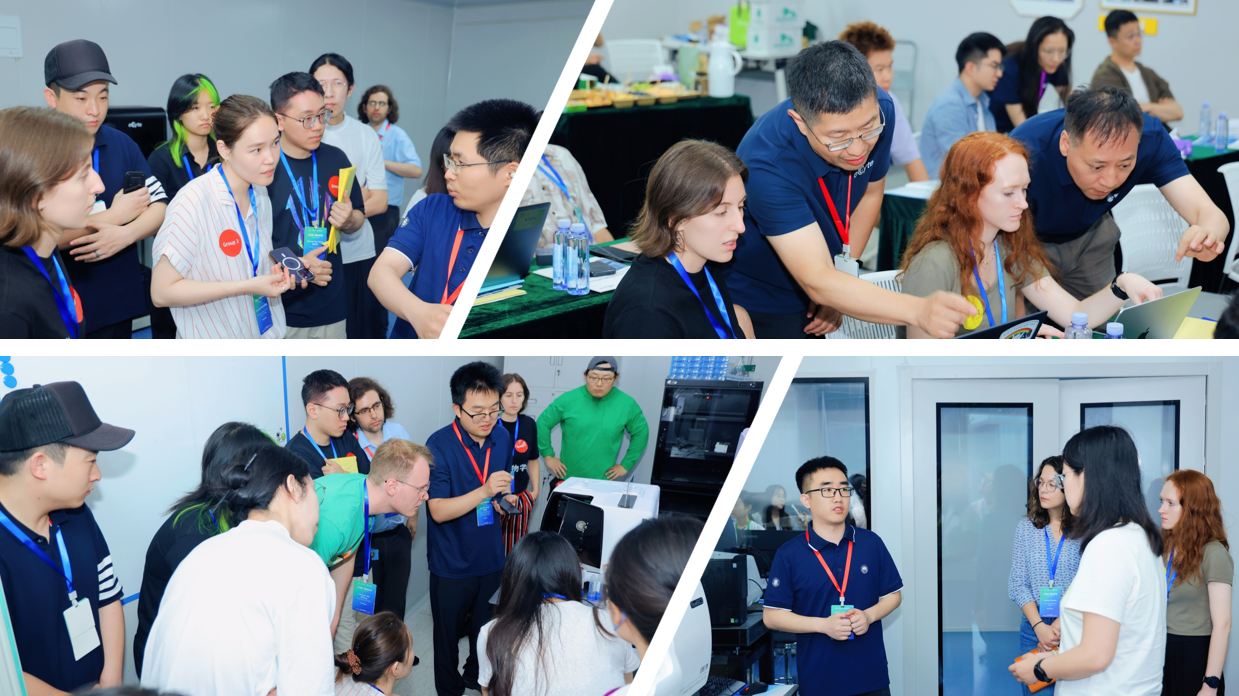
During the program, participants will complete hands-on training in Qingdao before visiting iMAPS nodes in Beijing/Xiong’an and Shanghai, where metaramanomics platforms are already in operation. The program covers single-cell Raman spectral acquisition, functional-cell recognition and sorting, post-sorting cultivation and sequencing, microdroplet cultivation, digital colony recovery and cloud-based Ramanome data analysis. Applications span synthetic biology, agricultural and environmental microbiomes, drug screening, cell quality control and probiotic discovery.
"This summer school is both a technical training program and a practical step toward connecting young scientists through the international iMAPS network," XU said. "Our goal is to make metaramanomics useful in real-world research."
The CAS iMAPS Summer School is planned as an annual program. More information is available at www.imaps.info