QIBEBTJoins ISSCAS and IUE to Co-organize Soil iMAPS Symposium at WCSS 2026
On June 9, during the 23rd World Congress of Soil Science, the Soil in-situ Metabolic Atlas Projects @ Single-cell (Soil iMAPS) Symposium was held in Nanjing, China. The symposium was co-organized by QIBEBT, the Institute of Soil Science, Chinese Academy of Sciences (ISSCAS), and the Institute of Urban Environment (IUE), Chinese Academy of Sciences.
Soil forms only a thin layer on Earth’s land surface, yet it underpins food security, ecosystem stability, and ecological civilization. Each gram of soil contains hundreds of millions of microorganisms that drive carbon and nitrogen cycling, maintain soil fertility, and support ecological balance. However, conventional methods often cannot monitor, in real time, what these microbes are doing metabolically in soil, nor can they rapidly recover target microbes with in-situ functional activity.
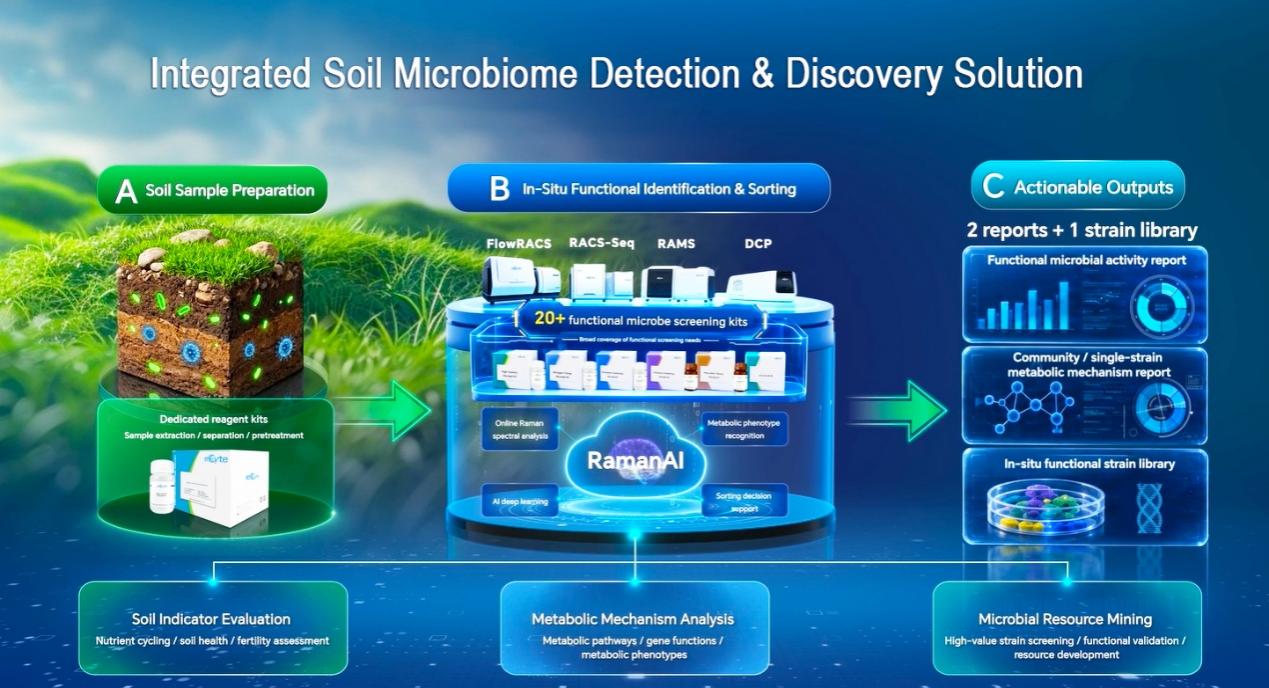
The symposium explored how the iMAPS could help tackle this challenge. With metaramanomics as a core technology platform, iMAPS uses single-cell Raman spectroscopy to analyze microbiome metabolism in living cells at high throughput and in situ. The approach also enables scientists to sort individual cells with target metabolic functions and link them to downstream cultivation and sequencing, helping build libraries of functionally active strains from native environments. This single-cell “sensing–sorting–cultivation–application” workflow is expected to support a new generation of microbiome resource discovery.
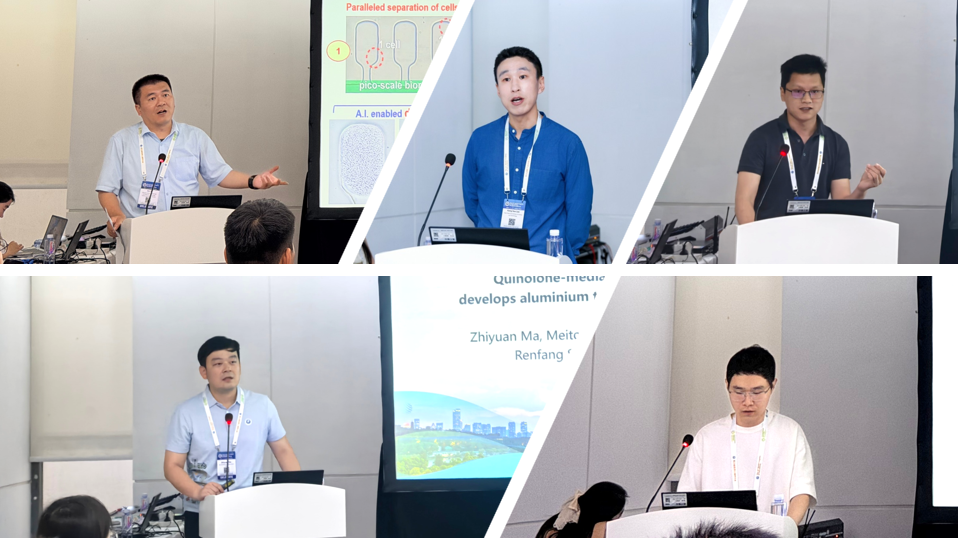
At the symposium, Prof. XU Jian from QIBEBT, Assoc. Prof. LEE Kang Soo from Ulsan National Institute of Science and Technology, Prof. CHEN Qinglin from IUE, Dr. MA Zhiyuan from the ISSCAS, and GAO Junqi from IUE presented recent advances in Soil iMAPS platforms and applications. Topics included soil Raman-activated flow cytometry & sorting coupled with digital clonal cultivation, optical-tweezers-assisted Raman-activated flow cytometry & sorting, drought-resilient microbiome design, aluminum tolerance mechanisms in soil microbes, and discovery of phosphorus-metabolizing soil microbes.
Prof. XU Jian also introduced a three-stage roadmap for Soil iMAPS: platform construction, application expansion, and networked innovation. Within CAS, Soil iMAPS platforms are already operating at several institutes and laboratories, including QIBEBT, ISSCAS, IUE, the Research Center for Eco-Environmental Sciences, the CAS Soil Big Data and Intelligent Detection Laboratory in Xiong’an, and the State Key Laboratory of Black Soil Conservation and Utilization.
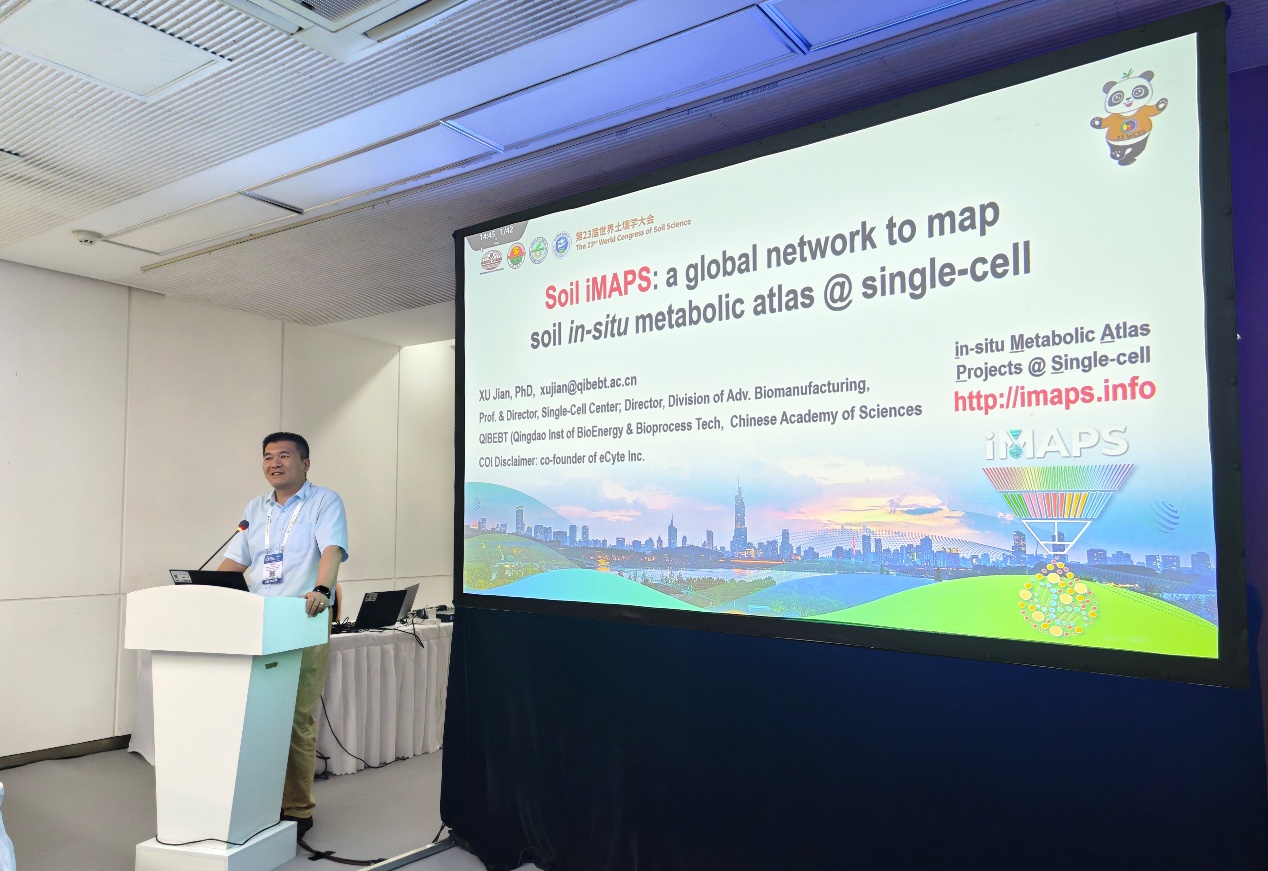
These coordinated efforts are supporting black soil protection, cultivated-land quality improvement, soil probiotic resource discovery, public training, and science outreach. They also provide a foundation for building a global network for in-situ soil microbiome metabolism monitoring and functional strain mining, with the long-term goal of addressing climate change, food security, and biodiversity conservation.