iMAPS Spearheads WMP endeavor in Microbiome Solution for Global Climate Governance
Recently, the World Microbiome Partnership (WMP) announced the official launch of Environmental Microbiomes and Climate Change Working Group (WMP-F). Co-led by Prof. Xu Jian (Qingdao Institute of Bioenergy and Bioprocess Technology - QIBEBT, Chinese Academy of Sciences, China), Prof. Rob Knight (University of California, San Diego, USA), and Dr. Emma Rocke (University of Cape Town, South Africa), WMP-F aims to integrate microbiome science into the core framework of global climate action.
This marks a significant milestone, with the iMAPS (in-situ Metabolic Atlas Projects @ Single-cell, www.imaps.info) international consortium, initiated by QIBEBT and its partners and involving nearly 70 research institutions and leading enterprises globally, now becoming one signature of WMP’s action plan.
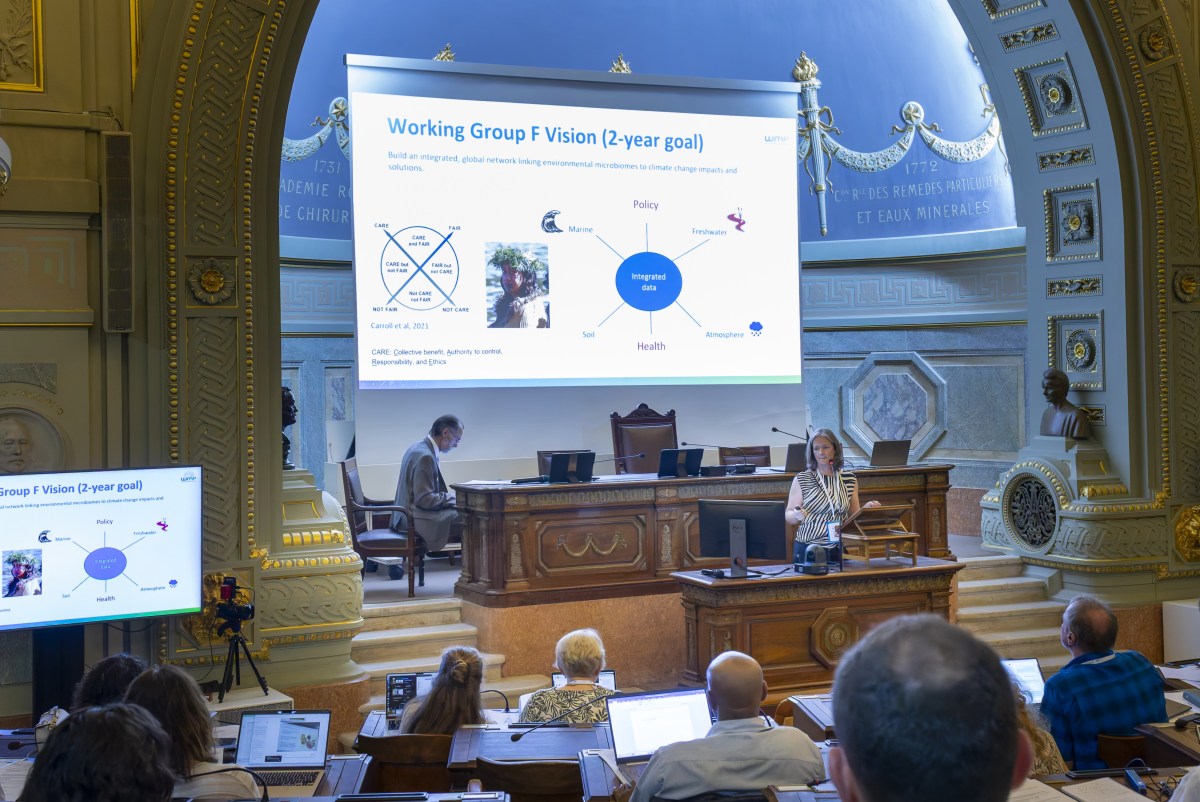
Microorganisms, often referred to as the "invisible climate engineers" of Earth, are emerging as a key focus in global climate governance. The WMP-F working group, in a Perspective article published in Green Carbon titled "Microbiomes for a Stable Planet: Embedding Microbial Processes in Global Climate Action", emphasizes that incorporating microbial processes into global climate governance is a pivotal pathway for achieving robust and equitable climate action.
One core action of WMP-F is the iMAPS Initiative, which introduces the “Metaramanomics” as an innovative platform for profiling, sorting and cultivation of microbiomes via single-cell metabolic function. The Initiative, primarily based on seminal instruments invented by QIBEBT and eCyte, Inc., is creating a global network of automated, intelligent, and scalable systems for "screening before cultivation" and "screening while cultivation" of functional microorganisms. Based on this world-wide web of microbial “metabolic sensors + strain miners + ecological restorers”, iMAPS has a grand vision: “making microbiome single-cell in-situ metabolism detectable, selectable, cultivable, and usable, anytime and anywhere.”
Currently, iMAPS has launched its scientific infrastructure network with over 60 nodes worldwide. In Europe, the Metaramanomics platform at Imperial College London has been operating for over six months. The team will host an iMAPS Workshop with the synthetic biology theme in March 2026 and open the platform to external users. In North America, the iMAPS node at University of California, San Diego is progressing rapidly, focusing on high-throughput single-cell Raman-activated cell sorting coupled to whole-genome sequencing. In Asia, over 50 iMAPS nodes are now established or under construction across China, with nodes in Singapore and Mongolia that extend the network into Southeastern and Central Asia.
Hosted by the iMAPS nodes in China, nearly a dozen iMAPS Workshops were held during 2025, in cities like Zhangye, Beijing, Qingdao, Hangzhou, Changchun, Shanghai, Haikou, and Kunming, covering rapidly growing applications in agriculture, industry, environment, and marine sectors. In 2026, iMAPS Workshops will be organized in London, San Diego, Bangkok, and Singapore to accelerate standardization efforts and joint application development through international collaboration, with focuses on synthetic biology, precision medicine, and bioresource mining.
Microbiomes are a shared global resource and one of the key contributors to global climate governance. The ongoing advancement of the iMAPS scientific program within the WMP framework will greatly accelerate the exploration, mining, and utilization of this valuable resource.
Moving forward, QIBEBT plans to strengthen collaborative innovation with global partners, advance the Metaramanomics technology, and expand the iMAPS network to contribute technological solutions for protecting the Earth’s ecological security and promoting sustainable development.
(Text/Image by LIU Yang)