BioMed-iMAPS Workshop Highlights Metaramanomics Platform for Advancing Biopharmaceuticals and Cell Resource Mining
On January 6, 2026, the BioMed-iMAPS Workshop was successfully held in Zhangjiang, Shanghai. This event was co-hosted by the Shanghai Institute of Materia Medica (SIMM), Chinese Academy of Sciences, and Qingdao Institute of Bioenergy and Bioprocess Technology (QIBEBT), Chinese Academy of Sciences. The workshop brought together over seventy experts, scholars, and researchers from universities, research institutions, and industry, focusing on the deep integration of cutting-edge technologies for biopharmaceuticals and cell resource mining.
The event blended technical demonstrations and academic discussions, offering a comprehensive look at the innovative metaramanomics platform developed by QIBEBT. The system includes advanced tools such as Flow Cytometric Raman-Activated Cell Sorter (FlowRACS) and Digital Colony Picker (DCP), which enable new capabilities for real-time, non-fluorescent, high-throughput metabolic profiling of live cells. This system is poised to drive advancements in biopharmaceutical development and other life sciences.
Prof. ZHAO Qiang, Deputy Director of SIMM, welcomed the attendees, emphasizing the critical need for paradigm shifts in drug development. He highlighted that the key to breaking bottlenecks in drug discovery lies in live single-cell phenomics. The integration of QIBEBT's cutting-edge metaramanomics platform with SIMM’s world-class drug development platform will lead to significant scientific and industrial breakthroughs.
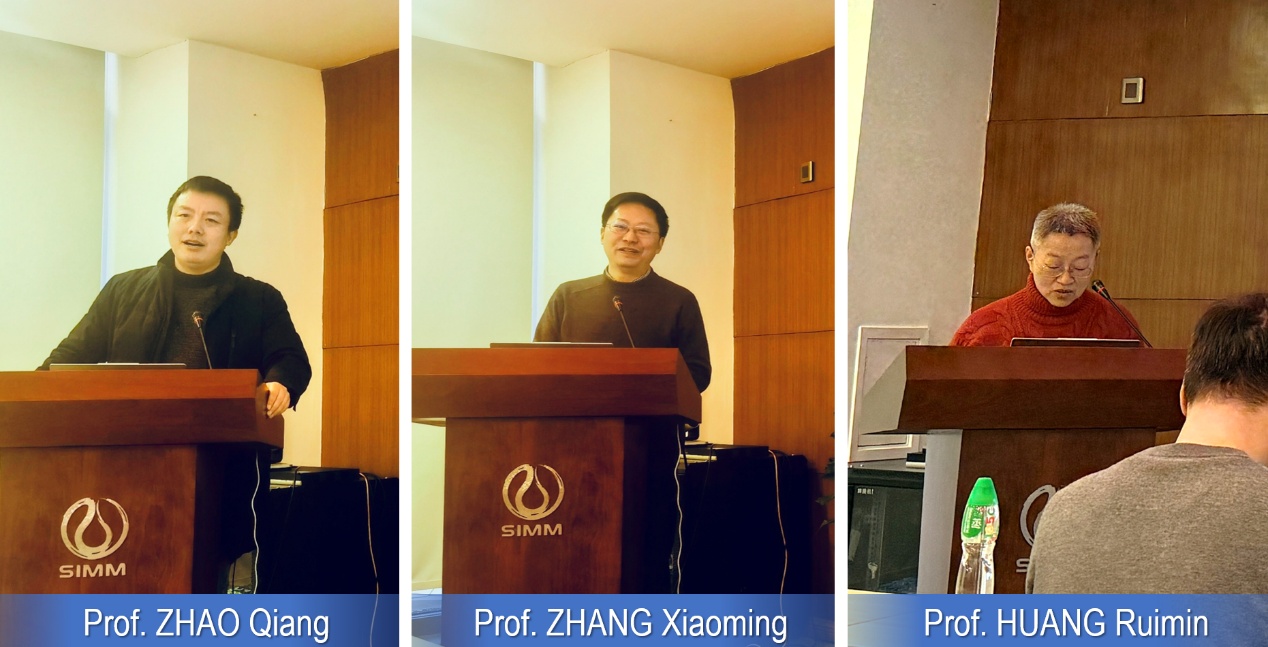
Deputy Director Prof. ZHANG Xiaoming of SIMM delivered an opening address, emphasizing the importance of cross-disciplinary and cross-institutional collaboration to tackle global challenges in drug discovery. He introduced the CAS Global Common Challenges Program on "Multidimensional Decoding of Aging and Tumor Evolution," highlighting the crucial role of the innovative Raman-based technology in this initiative. Prof. ZHANG stressed that the integration of iMAPS and Raman-based tools in this international collaboration would accelerate the development of comprehensive solutions, facilitating their application in addressing significant health issues such as aging and cancer.
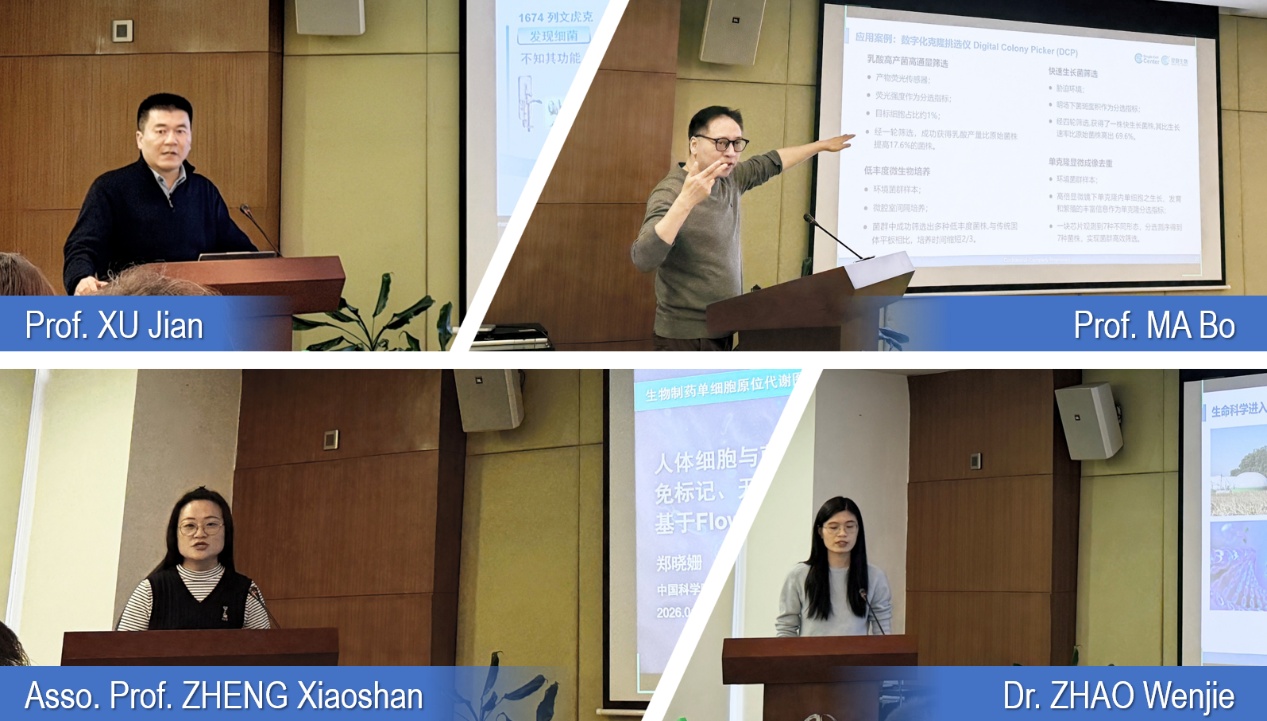
The session started by presentations by Prof. XU Jian, Prof. MA Bo, Asso. Prof. ZHENG Xiaoshan, Dr. ZHAO Wenjie, et al from Single-Cell Center, QIBEBT, who introduced the scientific mission, global network, core instruments and new applications from the iMAPS (in-situ Metabolic Atlas Projects @ Single-cell; http://iMAPS.info) Initiative. iMAPS aims to answer fundamental scientific questions related to single-cell precision using multi-omics approaches to target metabolic functions. iMAPS is expanding globally with over 60 network nodes, with its first phase of constructing a new-generation, global infrastructure for microbiome sciences expected to be completed by the end of 2026.
In the technical demonstration session, instrument engineers from QIBEBT and application specialists from SIMM showcased FlowRACS, which enables high-throughput, label-free Raman-activated sorting of cells while preserving their viability. This system addresses the limitations of traditional fluorescence sorting and significantly expands its applications. Additionally, the DCP system was introduced, demonstrating how AI-driven analysis can be used for high-throughput, low-cost screening and selection of microbial strains and antibody-secreting cells.
In the afternoon’s academic discussions, Prof. HUANG Ruimin et al. from SIMM led the discussion on the broad scope of application development and technological service enabled by the iMAPS Platform at SIMM. Moreover, the platform will support the research partnership between Chinese Academy of Sciences and the various national institutes in France.
(Text/Image by LIU Yang)