QIBEBT Provided Training on Single-cell Metabolic Mining of Black-Soils through the iMAPS Initiative
Experts from the Single-Cell Center at the Qingdao Institute of Bioenergy and Bioprocess Technology (QIBEBT) of the Chinese Academy of Sciences recently helped organize a training workshop titled “Multi-Omics for Black Soil: Single-Cell & Isotope Labeling Technologies.” Sponsored by the Bureau of Talents and Personnel, Chinese Academy of Sciences (CAS), and hosted by the Northeast Institute of Geography and Agroecology, CAS. This is part of the workshop series organized by the international scientific initiative of “in-situ Metabolic Atlas Projects @ Single-cell (iMAPS, www.imaps.info).”
The workshop provided training on the metaramanomics equipment developed by QIBEBT to over 200 agricultural researchers. It included demonstrations of the complete workflows for efficiently mining microbial resources in black soil by the high-throughput Raman flow sorter of FlowRACS.
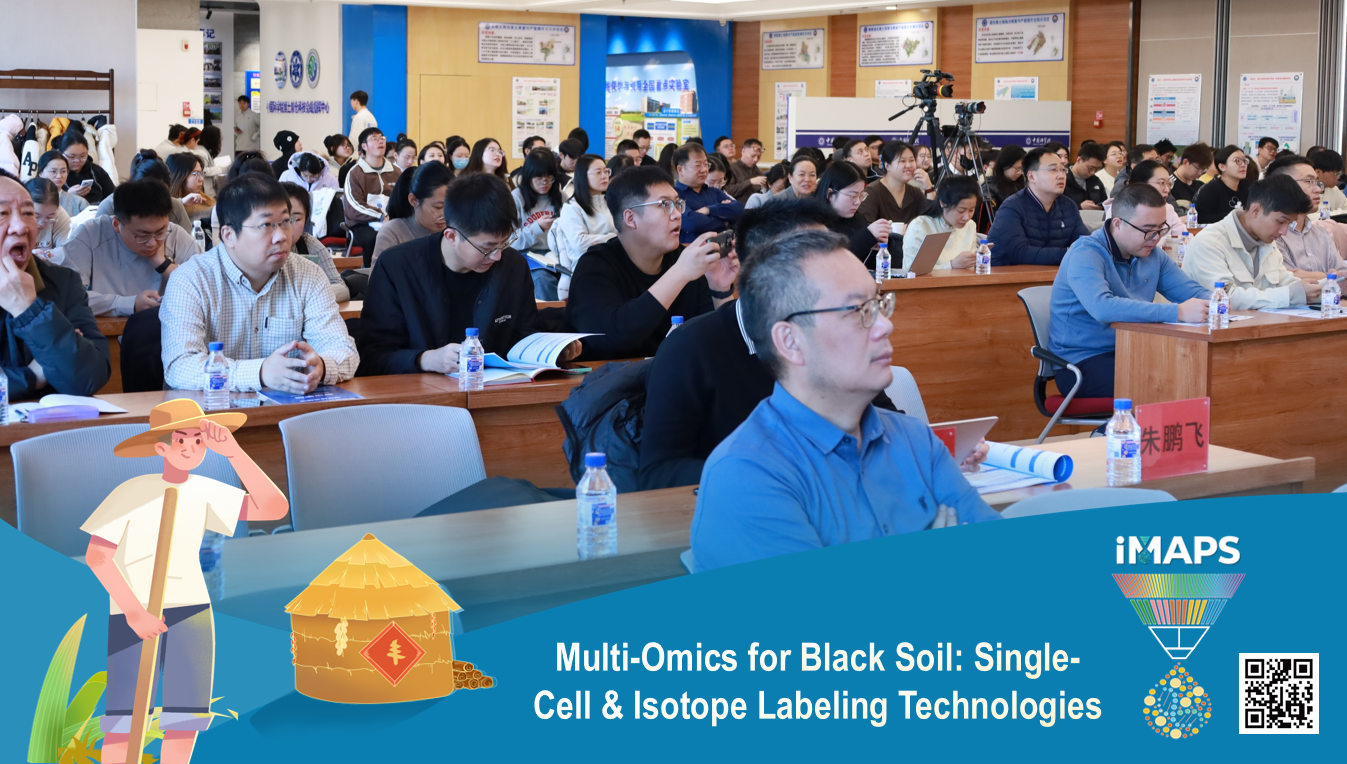
The training was structured into four modules: “Single-Cell Miner: Fully Automated Raman Detection and Sorting,”“Hands-on Practice,”“Isotope Sensor: Stable Isotope Biomarker Technology,” and “Black Soil Application Map: Full-Chain Technology Development and Demonstration.”
These modules aimed to strengthen participants’ abilities from theoretical understanding and technical mastery to practical application. Attendees included young scientists and technical staff from research institutes, universities, and government agencies across China.
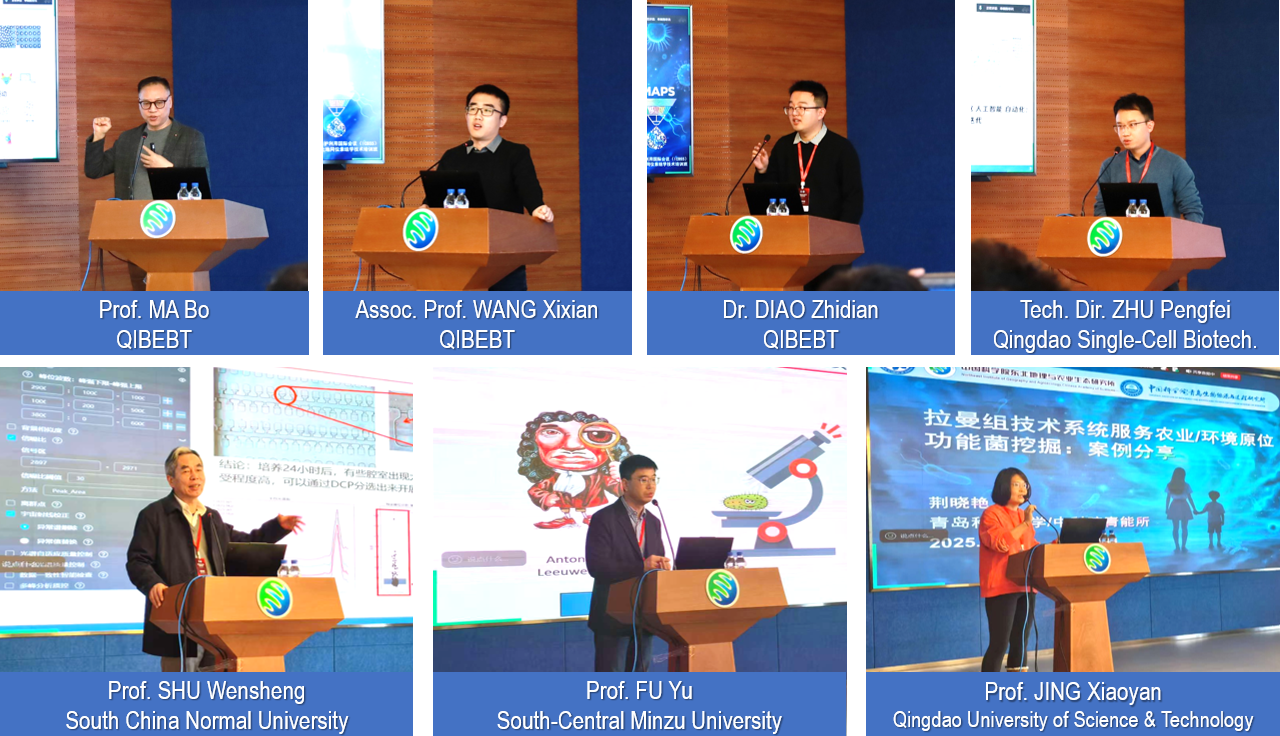
During the workshop, the Single-Cell Center team delivered cutting-edge talks on Raman-activated cell sorting, Raman-activated flow cytometry and sorting, AI-powered digital Colony Picker platform, and the application of the RamanAI database in black soil microbial studies. Partners from South China Normal University, South-Central Minzu University, and Qingdao University of Science & Technology also shared various cases, such as single-cell evolution acceleration, integration of Raman tweezers with AI, and in-situ mining of functional bacteria using metaramanomics technology.
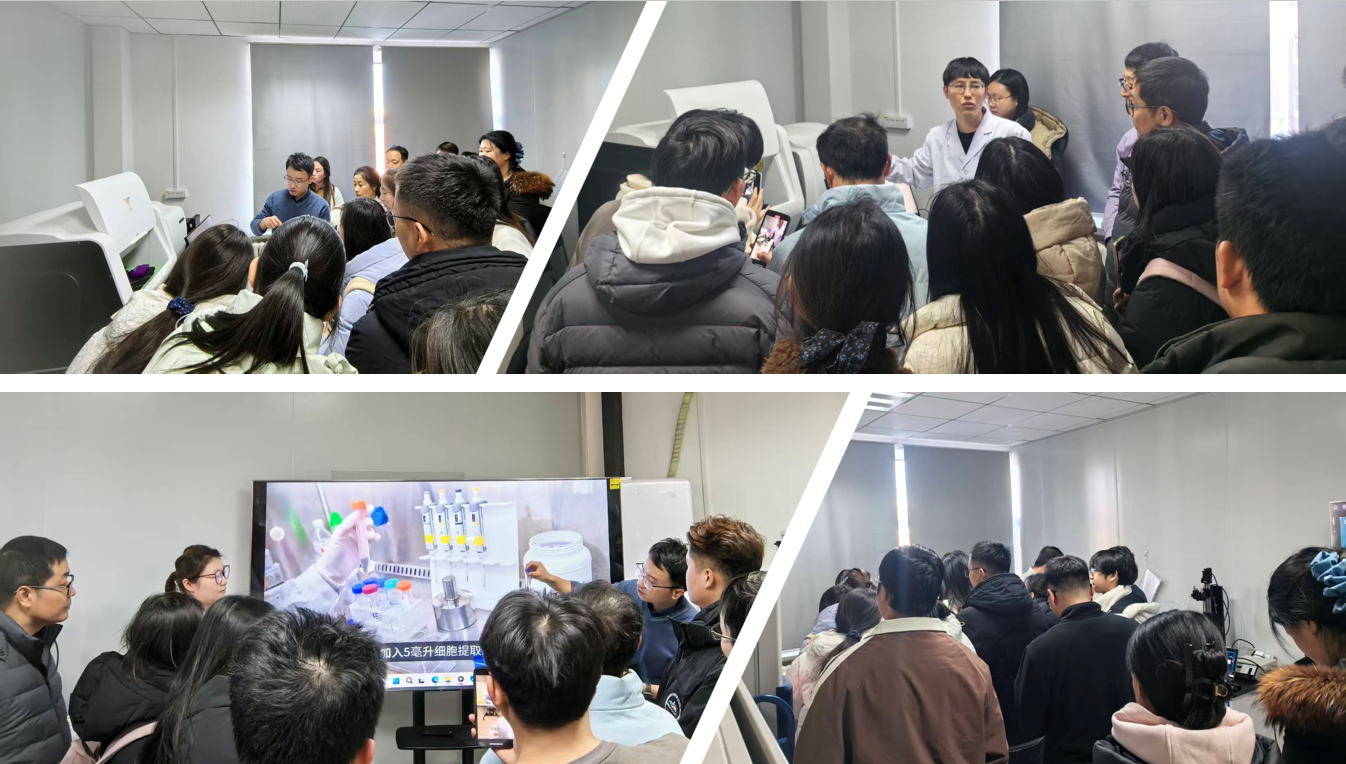
In the hands-on session, participants used a fully automated soil Raman flow-sorting system, developed with support from the CAS scientific instrument project, to provide practical exercises in soil microbial Raman-activated flow cytometry, sorting, and coupling with single-cell cultivation. This first-in-class advanced system, which is a cornerstone that underpins the iMAPS Consortium, allowed the trainees to gain first-hand experience in sample processing, functional sorting, and data analysis.
The training was partially supported by the iMAPS initiative, which aims to break the century-old bottleneck of rapid microbiome profiling and mining by shifting from “sequence-predicted metabolic potential” to “experimentally measured single-cell in-situ metabolic function plus their live cultures”. The initiative also seeks to establish a distributed, automated, intelligent network of “metabolic sensors + strain miners + ecological restorers.” The training for “screen-then-culture / screen-while-culture” approaches from the workshop would accelerate applications of these advanced technologies in the preservation and sustainable utilization of soil, and contribute to the implementation of the “Storing Grain in the Land” strategy.