Scientists Propose Microbe-Specific and Product-Specific Strategies (MPSS) and Introduces Applied Microbial Population Biology as a New Research Discipline
Bridging the gap between laboratory discoveries and industrial-scale biomanufacturing remains one of the major challenges in modern biotechnology. Successful commercialization depends not only on engineering high-performing microbial strains, but also on integrating considerations such as fermentation scale-up, downstream processing, and economic feasibility from the earliest stages of research and development.
To address this challenge, Prof. Shi'an Wang and collaborators from Beijing University of Chemical Technology and the Guangdong Technion–Israel Institute of Technology have proposed a new development framework termed Microbe-Specific and Product-Specific Strategies (MPSS) (Figure 1). Their work was recently published in Biotechnology Advances.
MPSS advocates that biomanufacturing should move beyond the conventional reliance on established model microorganisms and existing research platforms. Instead, it emphasizes selecting the most suitable microbial host according to the characteristics of the target product and the intended manufacturing process. By considering host selection, product characteristics, and process requirements as an integrated system from the outset, MPSS aims to improve the alignment between laboratory research and industrial application.
The authors further integrate MPSS with the widely adopted Design–Build–Test–Learn (DBTL) cycle and the concept of holistic bioprocess design, establishing an end-to-end development strategy spanning the entire biomanufacturing pipeline (Figure 2).
In conventional microbial engineering, strain construction, fermentation optimization, and downstream processing are often performed sequentially. While this approach facilitates rapid proof-of-concept studies, critical manufacturing challenges may only emerge at later development stages, increasing the risk of unsuccessful technology translation. In contrast, MPSS introduces host–product–process compatibility as a key consideration during the earliest stages of project design. The DBTL cycle provides iterative optimization of microbial strains and metabolic pathways, whereas holistic bioprocess design evaluates fermentation performance, process scale-up, downstream purification, manufacturing cost, and process robustness in an integrated manner. Together, these complementary approaches establish a continuous feedback framework that links biological engineering with process engineering, shifting biomanufacturing from optimizing individual biological components toward the co-design of scalable, manufacturable, and economically viable production systems.
Building upon this framework, the authors also propose Applied Microbial Population Biology (AMPB) as a new research discipline (Figure 3). Traditional microbial population biology has primarily focused on genetic diversity, evolutionary processes, and ecological interactions. AMPB extends these concepts toward industrial biotechnology by treating the naturally occurring genetic, phenotypic, and metabolic diversity within microbial populations as valuable resources for strain development.
Through function-oriented exploration of microbial diversity, population-scale phenotypic and metabolic characterization, and performance evaluation under industrially relevant conditions, AMPB is expected to facilitate the discovery and development of microbial strains with superior productivity, enhanced robustness, and improved industrial adaptability. This emerging discipline may provide new theoretical foundations and technological approaches for reducing uncertainty during industrial scale-up and accelerating the development of next-generation microbial cell factories.
The introduction of MPSS and AMPB provides a new perspective for addressing a longstanding challenge in industrial biotechnology—the disconnect between early-stage laboratory research and successful commercial implementation. By integrating biological design with engineering and manufacturing considerations from the beginning of research projects, these concepts offer a systematic framework for improving the efficiency and success rate of technology translation.
The authors note that widespread implementation of MPSS and the establishment of AMPB will require sustained interdisciplinary collaboration and continued validation through industrial practice. Looking ahead, further integration of biological research, process engineering, and industrial application is expected to accelerate the commercialization of microbial biomanufacturing technologies and contribute to the development of a sustainable bioeconomy.
Reference
Wang, S.*, Li, Z., Hu, P., Wang, Q., Chen, F., & Xu, P. Microbe-Specific and Product-Specific Strategies for Scalable Biomanufacturing. Biotechnology Advances, 2026, 92:109000. 10.1016/j.biotechadv.2026.109000
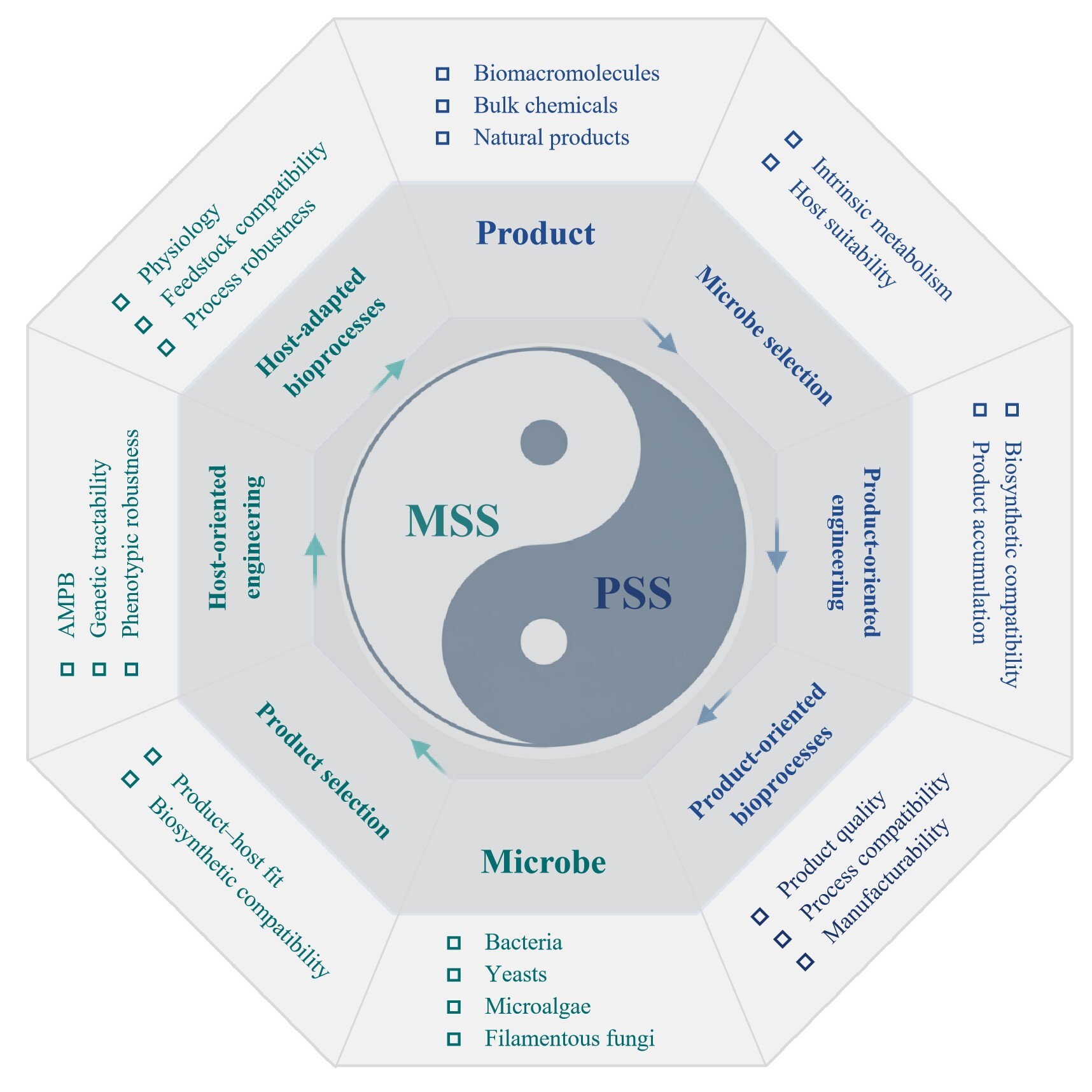
Figure 1. Conceptual framework of Microbe-Specific and Product-Specific Strategies (MPSS)
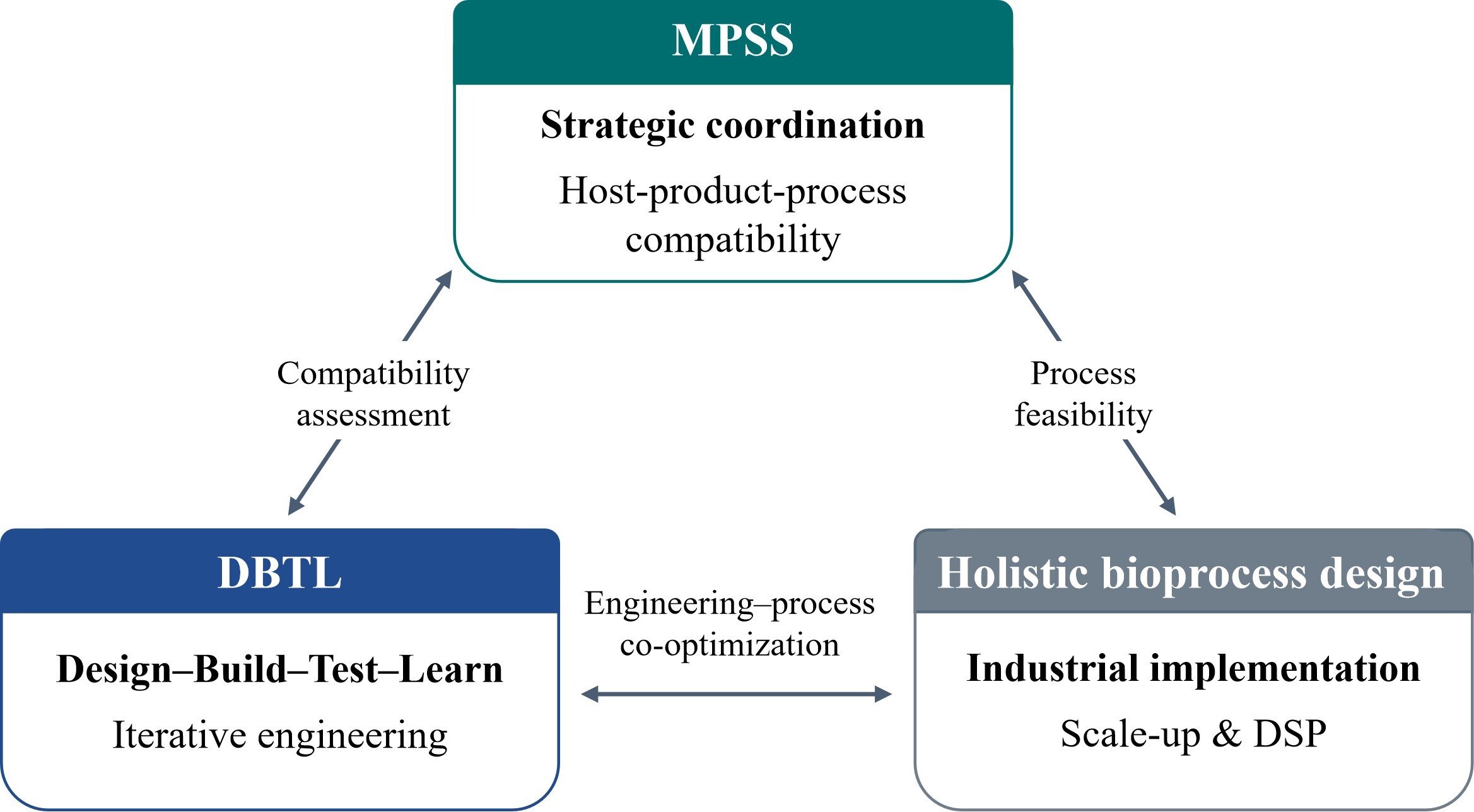
Figure 2. Complementary roles of MPSS, the DBTL cycle, and holistic bioprocess design in industrial biotechnology
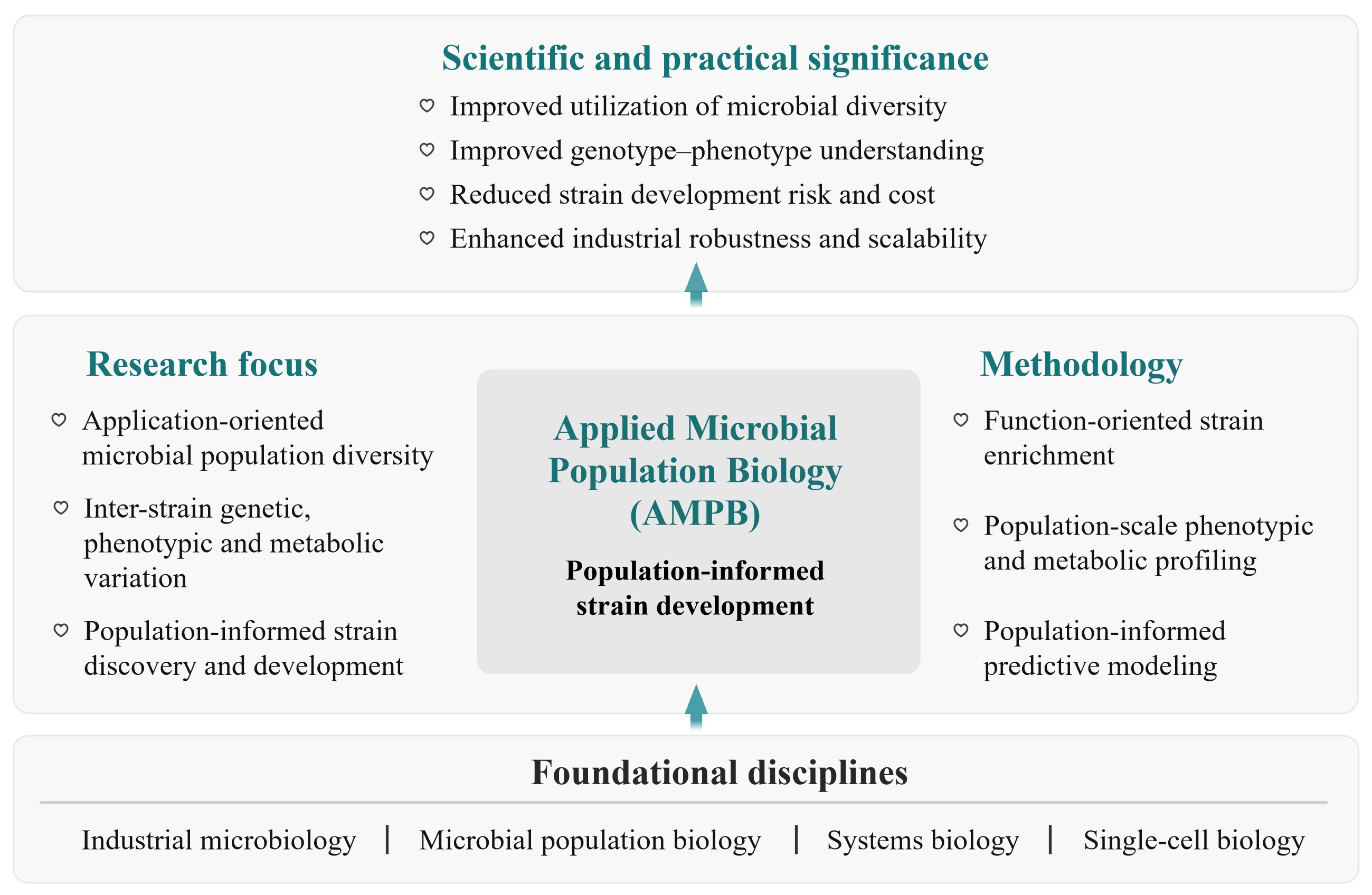
Figure 3. Conceptual framework of Applied Microbial Population Biology (AMPB)